Case StudyBathroom & Kitchen Renovations
12 min read

Bathroom Renovations SEO Case Study: #1 for a 12,100 Search Volume Keyword with 1,350% Top 3 Growth

How a Melbourne bathroom and kitchen renovations company achieved position 1 for the highly competitive 'bathroom renovations' keyword (12,100 monthly searches) and 1,350% top 3 growth through location page expansion, accreditation-driven E-E-A-T signals, and comprehensive local SEO.

#1 for 'bathroom renovations' (12,100 SV)
Primary Result
1,350% increase in top 3 keyword rankings
Secondary Result
Ongoing
Timeframe
Local SeoOn Page SeoTechnical SeoContent StrategyLink Building
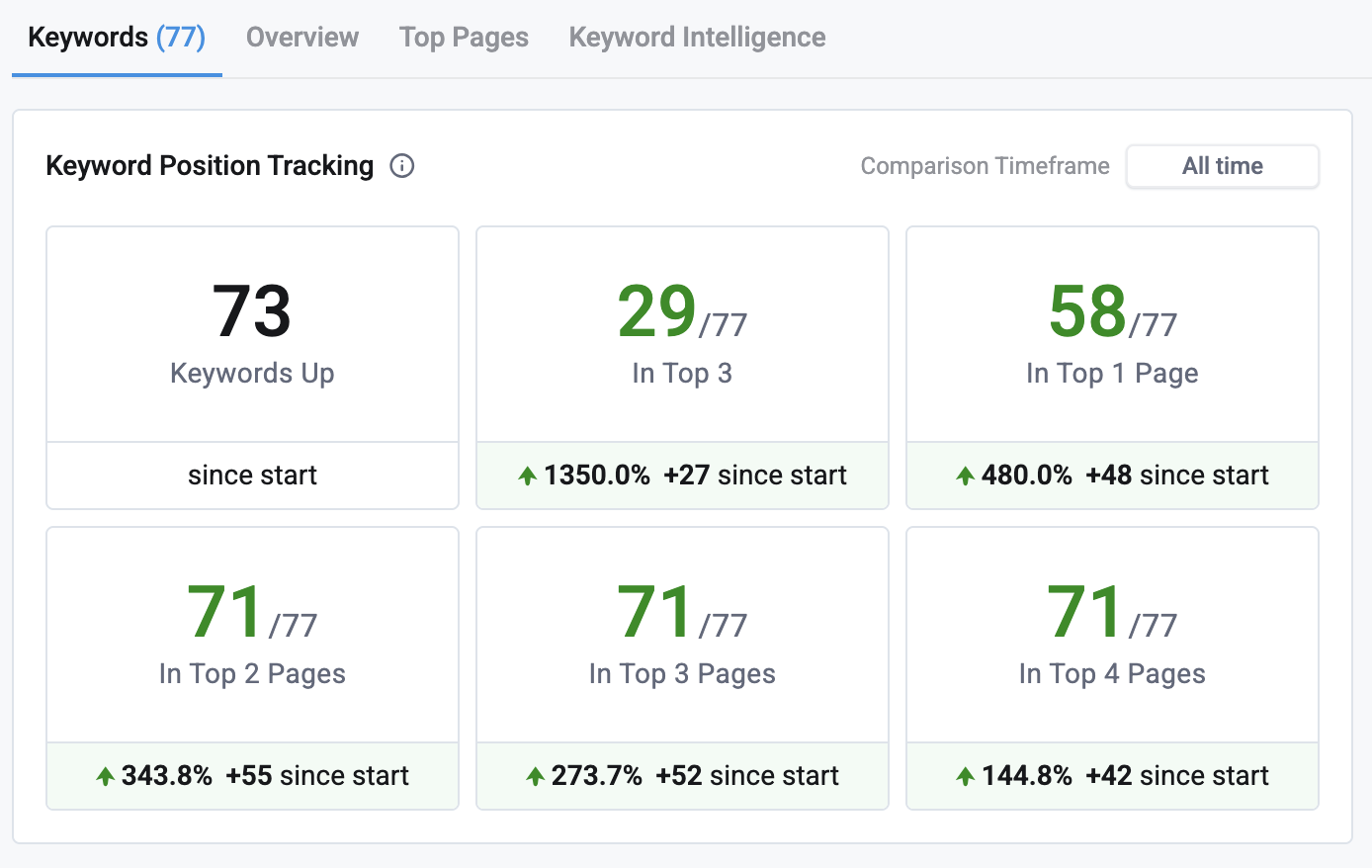
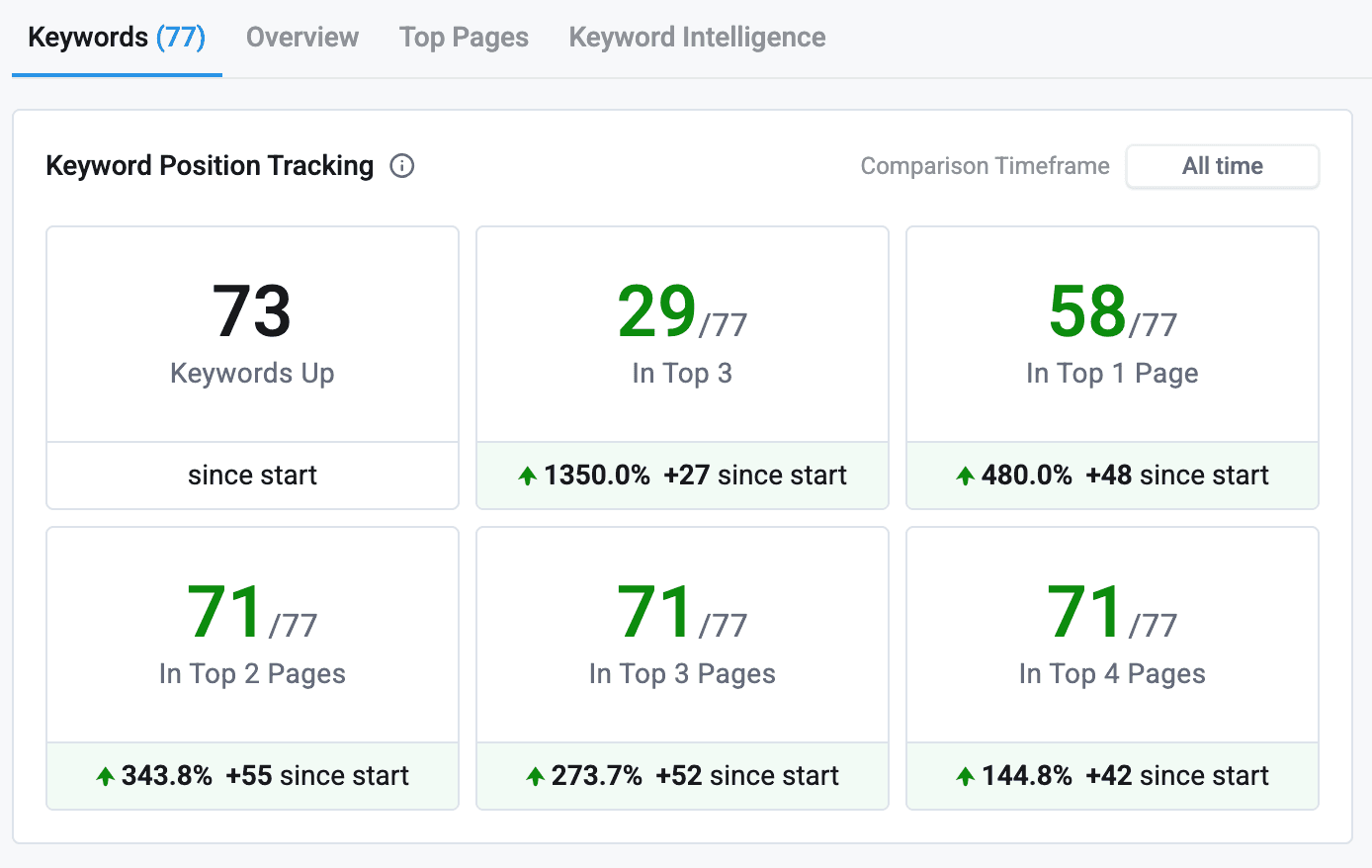
Keyword.com ranking tracking dashboard showing 1,350% top 3 growth and 58 page 1 rankings for Melbourne bathroom renovations SEO campaign managed by Kaan Turk

The Challenge

A well-established bathroom and kitchen renovations company operating across Melbourne came to me with a frustrating problem. The business had years of completed projects, a strong reputation in the industry, and the professional accreditations required by Victorian building regulations - but their website wasn't translating any of that credibility into organic search visibility. Despite serving dozens of suburbs across metropolitan Melbourne, the website was barely visible for the search queries that homeowners use when planning renovation projects.

The scale of the opportunity was enormous. The keyword "bathroom renovations" alone carries 12,100 monthly searches in Australia - and the business was sitting at position 15, buried on page two where fewer than 1% of searchers click. Location-specific keywords like "bathroom renovations Essendon," "bathroom renovations Coburg," and "kitchen and bathroom renovations Melbourne" were even further behind, many sitting beyond position 30 or completely invisible.

An initial SEO audit identified the structural and strategic gaps:

The site had no location-specific pages. Despite serving homeowners across dozens of Melbourne suburbs - from inner-city areas like Seddon and Essendon to outer suburbs like Balwyn North and Hampton - the website offered no suburb-level content. This meant the business was trying to rank for location-modified keywords with a single generic page, competing against competitors who had dedicated pages targeting each area. The on-page content across existing service pages was insufficient - both in volume and in the topical depth that Google's algorithms expect for renovation and building content. Trust signals were underutilised. The business owners held industry accreditations mandated by Victorian building regulations - credentials that directly demonstrate the expertise and trustworthiness Google looks for under its E-E-A-T framework - but these were either buried deep in the site or missing entirely from the pages and structured data where they would have the most impact. Internal linking was sparse, with no strategic pathways connecting service pages to location pages or supporting content to commercial pages. The site's technical SEO had accumulated standard issues - inconsistent meta tags, missing schema markup, and structural inefficiencies that limited crawlability.

The Strategy

I designed a two-pronged strategy: aggressive geographic expansion through dedicated suburb pages combined with a trust signal overhaul that would leverage the business's professional accreditations as a ranking catalyst.

Melbourne's renovation market is one of the most competitive local SEO landscapes in Australia. The city's sprawl across dozens of distinct suburbs creates both a challenge and an opportunity. The challenge is that generic "Melbourne" keywords face intense competition from well-funded competitors and aggregator sites. The opportunity is that suburb-level keywords - "bathroom renovations Essendon," "kitchen renovations Coburg" - have meaningful search volume but face far less competition. A business that can build authoritative suburb-level pages while also competing for the broad Melbourne keywords has the potential to dominate the entire geographic market.

The accreditation angle was the strategic differentiator. In the Victorian renovation industry, registered builders must hold specific licenses and comply with regulatory standards - credentials that many competitors either don't display prominently or fail to communicate to search engines through structured data. I identified this as the single highest-potential E-E-A-T signal available: if Google could clearly understand that this business held verified industry credentials, it would have a concrete, machine-readable reason to preference it over competitors whose accreditation status was ambiguous.

The Implementation

Accreditation & E-E-A-T Signal Integration

This turned out to be the most impactful single action in the entire campaign. The business owners' professional accreditations - their registered builder credentials, industry association memberships, and regulatory compliance certifications - were strategically placed throughout the site and encoded in structured data.

The credentials were added to the site's footer menu, ensuring they appeared on every page and provided a persistent trust signal regardless of which page a visitor or crawler landed on. They were integrated into the about page with full context about what each accreditation means and the standards it represents. Most critically, the accreditation information was encoded into the site's schema markup - including the specific credential types, issuing authorities, and registration numbers where applicable.

The impact was dramatic and fast. Within one month of implementing the accreditation signals, 15 keywords entered the first page of Google. This wasn't a gradual improvement - it was a step-change in the site's ranking trajectory. The accreditation data gave Google a clear, verifiable signal that this business met the expertise and trustworthiness criteria that matter most for YMYL (Your Money or Your Life) content, which includes home renovation services where significant consumer spending is involved.

This result reinforces something I've observed across multiple campaigns: Google's E-E-A-T framework isn't abstract. It responds to concrete, verifiable signals - and for regulated industries where practitioners must hold specific licenses, communicating those credentials through both visible page elements and structured data can produce ranking improvements that are both rapid and substantial.

Location Page Expansion

With the trust foundation established, I built out a comprehensive network of suburb-specific landing pages covering every major area the business serves across Melbourne. Each location page was built as a genuine, standalone piece of content - not a template with swapped suburb names, which Google's algorithms can easily identify and devalue.

Every suburb page was crafted with unique content covering the renovation landscape specific to that area - the housing stock typical of the suburb, the common renovation challenges homeowners face in that area, council-specific considerations, and the types of projects the business has completed nearby. This level of geographic specificity created pages that were genuinely useful to homeowners researching renovations in their suburb, which translated directly into ranking performance.

The location pages targeted keywords with the consistent structure of "[service] + [suburb]" - "bathroom renovations Essendon," "kitchen renovations Coburg," "bathroom renovators Hampton" - capturing the long-tail, high-intent queries that homeowners use when they're past the research phase and ready to get quotes from local builders.

Custom Internal Linking Components

To support the location page architecture, I developed new website components specifically designed to strengthen internal linking across the suburb network. These components - strategically placed on service pages, blog posts, and other location pages - created contextual linking pathways between related areas and services.

For example, the main "bathroom renovations Melbourne" page linked to each suburb page, establishing a hub-and-spoke architecture. Each suburb page linked to related suburb pages in adjacent areas, to the main service pages, and to relevant blog content. This cross-linking network ensured that the topical authority built by any individual page was distributed across the entire geographic content structure.

The components were designed to serve both SEO and user experience purposes. A homeowner browsing the Essendon page could easily navigate to nearby suburbs like Seddon or Coburg, explore different service types, or read relevant renovation guides - creating the kind of engaged browsing behaviour that sends positive quality signals to Google.

Comprehensive On-Page & Technical SEO

Alongside the strategic initiatives, I executed the full on-page and technical SEO program across the site. Every page received optimised meta titles and descriptions targeting specific keyword-location combinations. Content was written or rewritten with proper heading hierarchies, semantic entity coverage, and the technical renovation terminology that signals genuine industry expertise.

Schema markup was expanded beyond the accreditation data to include LocalBusiness schema with accurate service area definitions, Service schema for each renovation type, FAQ schema addressing common homeowner questions, and Review schema to surface the business's customer testimonials in search results.

Blog content was developed to build topical authority in the renovation space - covering planning guides, cost considerations, design trends, and regulatory information that Melbourne homeowners actively search for. Each post was internally linked to relevant service and location pages, creating a content ecosystem that strengthened the commercial pages through contextual relevance.

Link building efforts focused on earning backlinks from relevant industry directories, building and design publications, and local Melbourne business networks - reinforcing the domain's authority for both generic and location-specific renovation queries.

The Results

The campaign delivered results that exceeded expectations - both in the scale of the ranking improvements and the speed at which they materialised after the accreditation implementation.

Key Performance Metrics

Keyword ranking tracking dashboard
Keyword.com position tracking across 77 monitored keywords showing comprehensive ranking dominance across Melbourne and suburb-level keywords.

Metric Before After Change
Keywords in Top 3 2 29 +1,350.0%
Keywords on Page 1 (Top 10) 10 58 +480.0%
Keywords in Top 20 16 71 +343.8%
Keywords in Top 30 19 71 +273.7%
Keywords in Top 40 29 71 +144.8%
Keywords Moving Up - 73/77 94.8% of tracked terms

The most striking metric: 73 out of 77 tracked keywords improved - a 94.8% improvement rate. This near-universal ranking growth across the entire keyword portfolio indicates that the strategy didn't just improve a few pages; it elevated the entire domain's authority in the renovation space.

Headline Rankings

Keyword detail view
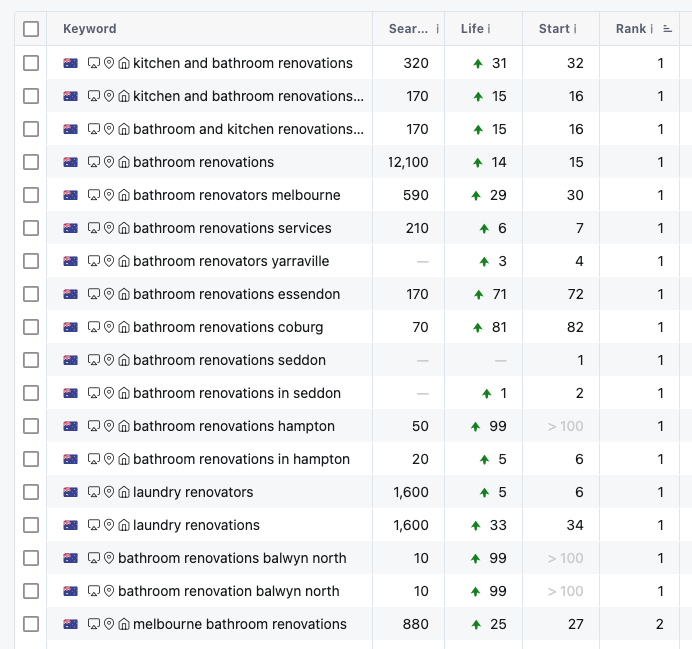
Keyword detail view showing position 1 for the highest-volume keyword and dominant rankings across Melbourne suburb keywords.

The individual keyword movements tell the story of a complete market takeover:

"bathroom renovations" - the single highest-volume keyword in the renovation category at 12,100 monthly searches - moved from position 15 to position 1. This keyword alone represents the kind of search visibility that transforms a business. At position 15, the page received virtually no organic clicks. At position 1, it captures an estimated 28-34% of all searches - potentially hundreds of clicks per day from homeowners actively planning bathroom renovations.

"laundry renovations" (1,600 SV) and "laundry renovators" (1,600 SV) - both reached position 1, opening up an entirely new service vertical in organic search.

"kitchen and bathroom renovations" (320 SV) moved from position 32 to position 1, alongside variants at 170 SV that also reached the top position.

Location-specific keywords saw the most dramatic improvements. "Bathroom renovations Essendon" jumped from position 72 to 1. "Bathroom renovations Coburg" moved from position 82 to 1. "Bathroom renovations Hampton" and "bathroom renovations Balwyn North" both climbed from beyond position 100 to position 1. These results validate the suburb page strategy - every location page that was built and optimised is now ranking in the positions that capture local renovation enquiries.

"Melbourne bathroom renovations" (880 SV) improved from position 27 to position 2, with the broader "bathroom renovators Melbourne" (590 SV) moving from position 30 to position 1.

The Accreditation Effect

The correlation between the accreditation implementation and ranking improvements deserves specific attention. The 15 keywords that entered page 1 within a month of adding the credentials signals represent one of the fastest ranking responses I've seen in a competitive market. This speed suggests that the accreditation data resolved a specific trust signal gap that was holding the site back - once Google could verify the business's credentials through structured data, it had the confidence to promote the site for YMYL renovation queries where trust is a primary ranking consideration.

Key Takeaways

1. Professional accreditations are an E-E-A-T ranking lever - but only if Google can see them.
This business held all the right credentials but hadn't communicated them to search engines. Adding accreditation information to the footer, key pages, and schema markup produced a measurable, rapid ranking improvement. For any business in a regulated industry - building, healthcare, finance, legal - ensuring credentials are both visible on-page and encoded in structured data should be a priority.

2. Suburb-level location pages create compound local ranking opportunities.
A single "Melbourne" page can't rank for dozens of suburb-specific queries. Dedicated location pages - with genuine, unique content for each area - captured the long-tail searches that represent homeowners ready to get quotes. The internal linking between these pages created a geographic authority network that strengthened the entire site.

3. The highest-volume keyword in a category is winnable with the right signals.
Ranking #1 for "bathroom renovations" at 12,100 monthly searches required every layer working together - technical foundation, content depth, accreditation trust signals, location page authority, and internal linking architecture. No single optimisation would have been sufficient, but the combination created an unassailable position.

4. Near-universal keyword improvement (94.8%) signals domain-level authority growth.
When nearly every tracked keyword improves simultaneously, it indicates that the SEO work hasn't just optimised individual pages - it's elevated the entire domain's perceived authority and relevance in its category. This is the compound effect of combining trust signals, content depth, and geographic coverage into a cohesive strategy.


About This SEO Campaign

Industry: Bathroom & Kitchen Renovations
Location: Melbourne, Victoria (metro-wide with suburb-level coverage)
Campaign Duration: Ongoing
Services Applied: Local SEO, Technical SEO, Content Strategy, Link Building, Schema Markup Implementation, Location Page Development
Primary Goal: Dominate organic search for bathroom and kitchen renovation keywords across Melbourne and surrounding suburbs
SEO Consultant: Kaan Turk


Running a renovation or trades business across a major metro area without suburb-level SEO? Get in touch for a free SEO audit discussion - I'll map the keyword opportunities in your service area and show you how location page expansion can multiply your organic enquiries.

Local SeoOn Page SeoTechnical SeoContent StrategyLink Building
Share:
KT
Kaan TURKAbout
Senior SEO Specialist

15 years of SEO expertise. Former SEO Lead for Louis Vuitton, LC Waikiki, Vakko, Enterprise Rent a Car, and Monster Notebook. Mathematics graduate bringing data-driven precision to search engine optimisation.

Want Similar Results for Your Business?

Every project starts with understanding your unique challenges. Let's discuss how we can transform your organic presence.