Case StudyPet Products / eCommerce
12 min read

Dog Bed eCommerce SEO Case Study: Fixing Cannibalisation to Rank #1 for a 1,900 SV Keyword

How one of Australia's largest dog bed brands fixed keyword cannibalisation between WooCommerce product categories and tag pages, achieving 27 top 3 keyword rankings, 600% page 1 growth, and 25,600 organic clicks from 2.15 million impressions.

#1 for 'dog beds' (1,900 SV) - from beyond position 100
Primary Result
575% increase in top 3 keyword rankings
Secondary Result
Ongoing
Timeframe
Ecommerce SeoOn Page SeoTechnical SeoContent StrategyLink Building
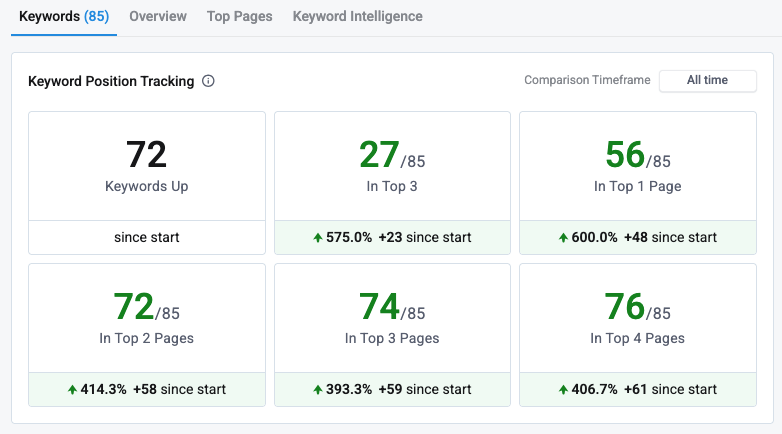
Keyword.com ranking tracking dashboard showing 575% top 3 growth and 56 page 1 rankings for dog bed eCommerce SEO campaign managed by Kaan Turk

The Challenge

One of Australia's largest dog bed brands was sitting on a paradox. The business had an extensive product catalogue - covering every type of dog bed from waterproof outdoor beds and raised cots to plush indoor beds, chew-proof options, and orthopaedic designs - hosted on a WordPress and WooCommerce store. The product range was comprehensive, the brand was established, and the market demand was strong. Yet the site was virtually invisible for its most valuable keywords. The primary keyword, "dog beds," carrying 1,900 monthly searches, sat beyond position 100. "Pet beds" at 2,900 monthly searches was similarly buried.

When I audited the site, the root cause became immediately clear: the site was cannibalising itself on a massive scale.

WooCommerce generates two types of taxonomy pages by default - product category pages and product tag pages. Both page types create indexable URLs that often target identical or overlapping keywords. The client had built out product categories for their bed types (waterproof dog beds, raised dog beds, plush dog beds) while simultaneously using product tags that targeted the same or very similar terms. The result was dozens of pages competing against each other for the same search queries.

This is one of the most damaging SEO patterns in eCommerce, and it's particularly insidious because it happens automatically through WooCommerce's default behaviour. Each cannibalising page dilutes the other's ranking signals. Google receives conflicting information about which page should rank for a given query, so it often ranks neither - or ranks both poorly. The more pages that compete, the more the site's authority is fragmented across URLs that are all fighting for the same positions.

An SEO audit confirmed the full scope of the problem:

Product category pages and tag pages were competing for identical keyword targets across the site's entire product taxonomy. The category pages themselves - the pages that should have been the primary ranking assets - had minimal text content. Each page displayed a product grid with images and prices but offered no descriptive content, no buying guidance, and no keyword-targeted copy. The text-to-image ratio across the store was heavily skewed toward images, giving Google almost nothing to work with when assessing the page's topical relevance. There was no clear URL hierarchy distinguishing primary category pages from secondary tag pages, so Google treated them with equal (low) authority. The blog and off-site authority signals were insufficient to compensate for the on-site cannibalisation.

For a brand competing in the Australian pet products market - where large retailers, marketplace aggregators, and well-funded D2C brands dominate the top positions - these structural issues were an insurmountable barrier. No amount of content marketing or link building could overcome a foundation where the site's own pages were undermining each other.

The Strategy

The strategy centred on a decisive structural intervention: eliminate the cannibalisation, establish clear keyword ownership for every page, and then build the content and authority layer on a clean foundation.

I designed the approach in three phases. Phase one was the cannibalisation fix - a surgical restructure of the site's taxonomy to ensure every keyword had exactly one target page. Phase two was the content transformation - converting thin product grid pages into content-rich category landing pages. Phase three was the authority building - blog content and link building to amplify the rankings once the structural and content foundations were solid.

The pet products eCommerce market in Australia has specific competitive dynamics that informed the strategy. The market is dominated by large retailers with massive domain authority and extensive product ranges. Competing against these players requires a niche-specific content depth that generalist retailers can't match. A dedicated dog bed brand can cover the topic with an authority and specificity that a general pet supplies retailer - which sells everything from cat food to fish tanks - simply cannot replicate. This topical depth advantage is the primary competitive lever for specialist eCommerce brands.

The Implementation

Keyword Mapping & Cannibalisation Resolution

The first step was building a comprehensive keyword map that assigned every commercially valuable keyword to exactly one URL. I analysed the full taxonomy of product categories, product tags, and any other indexable URLs competing for overlapping terms, and made clear decisions about which page should own each keyword target.

For most keyword groups, the product category page was the natural owner - these were the pages with the strongest internal linking, the most logical position in the site hierarchy, and the best user experience for shoppers browsing by product type. Tag pages that duplicated these keyword targets were marked as noindex, removing them from Google's index entirely while keeping them functional for internal site navigation.

This noindex strategy was applied systematically across the site. Rather than a blanket approach, each tag page was evaluated individually. Tags that targeted a keyword already owned by a category page were noindexed. Tags that served a unique keyword purpose with no category equivalent were retained and optimised. The result was a clean index where Google could clearly identify one authoritative page for every keyword - no duplication, no confusion, no fragmented signals.

The impact of cannibalisation removal is often underestimated. It's not just about removing competition between pages - it's about concentrating all of the site's accumulated authority, internal links, and content signals into a single URL per keyword. A category page that was previously sharing its ranking potential with three tag pages targeting the same keyword suddenly has triple the concentrated signal strength. This concentration effect is why cannibalisation fixes often produce rapid, dramatic ranking improvements.

Content Transformation for Category Pages

With the cannibalisation resolved, the next priority was transforming the category pages from product grids into ranking-worthy landing pages. Each target category page received substantial, SEO-optimised content written specifically for that product type and audience.

For the waterproof dog beds category, the content covered the materials and construction methods that make a bed genuinely waterproof versus merely water-resistant, the use cases where waterproof beds are essential (outdoor use, senior dogs, puppies in training), cleaning and maintenance considerations, and sizing guidance. For raised dog beds, the content addressed the orthopaedic and temperature regulation benefits, weight capacity considerations, indoor versus outdoor use, and the specific breeds and life stages that benefit most from elevated sleeping surfaces.

Every piece of content was designed to integrate seamlessly with the existing page design. The content sat alongside the product grid, enhancing the shopping experience rather than disrupting it. Shoppers browsing the waterproof dog beds category could read expert guidance about what to look for before scrolling through the product options - a content structure that serves both search engine optimisation and conversion optimisation.

The text-to-image ratio improvement was dramatic. Pages that had been almost entirely visual - product photos with no supporting text - now had substantial written content that gave Google clear topical signals. This content covered the semantic entities that Google associates with dog bed products: materials (memory foam, canvas, Oxford fabric), features (orthopaedic support, removable covers, non-slip bases), use cases (outdoor, indoor, travel, crate), and buyer considerations (size, breed, age, health conditions).

Blog Content & Topical Authority

With the commercial pages optimised, I developed a blog content strategy that targeted informational queries adjacent to the product categories. Topics included dog sleeping habit guides, breed-specific bed recommendations, seasonal bed selection advice, and care and maintenance guides for different bed materials.

Each blog post was strategically linked to the relevant category pages, passing topical relevance and authority to the commercial pages that drive revenue. A post about choosing the right bed for senior dogs linked to the orthopaedic and raised bed categories. A guide to outdoor dog beds linked to the waterproof category. This hub-and-spoke content architecture created reinforcing topical signals that strengthened the entire site's authority in the dog bed domain.

The link building campaign targeted pet industry publications, dog care blogs, product review sites, and relevant lifestyle media. Each link was evaluated for topical relevance and domain authority, with a focus on earning placements from sites that Google recognises as authoritative in the pet and animal care space. These external authority signals complemented the on-site work by providing the third-party validation that helps tip ranking battles in competitive eCommerce categories.

The Results

The combination of cannibalisation resolution, content transformation, and authority building produced comprehensive ranking growth across the entire product portfolio.

Keyword Rankings

Keyword.com ranking tracking showing 575% top 3 growth and 600% page 1 growth across 85 tracked keywords for dog bed eCommerce SEO campaign
Keyword.com position tracking across 85 monitored keywords showing dominant ranking improvements since the cannibalisation fix.

Metric Before After Change
Keywords in Top 3 4 27 +575.0%
Keywords on Page 1 (Top 10) 8 56 +600.0%
Keywords in Top 20 14 72 +414.3%
Keywords in Top 30 15 74 +393.3%
Keywords in Top 40 15 76 +406.7%
Keywords Moving Up - 72/85 84.7% of tracked terms

Headline Rankings

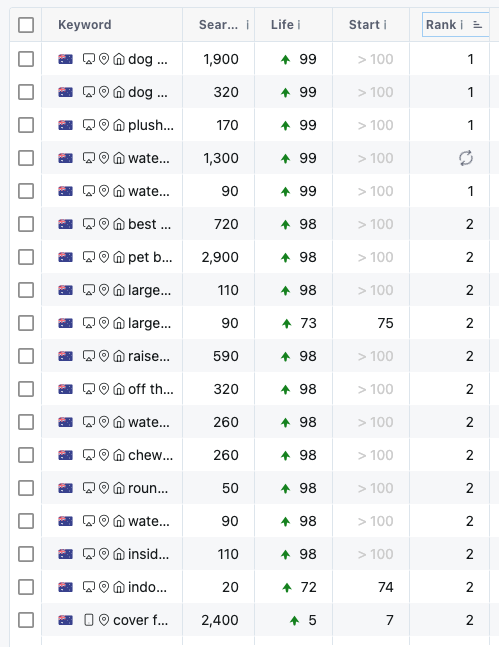
Keyword detail showing position 1 for dog beds, water resistant dog beds, plush dog beds, and other high-value product keywords
Multiple high-volume keywords moved from beyond position 100 to positions 1 and 2 after the cannibalisation fix and content optimisation.

The individual keyword movements demonstrate the power of the cannibalisation fix:

"dog beds" (1,900 SV) - beyond position 100 → position 1. The category's primary keyword, previously invisible, now commands the top organic position. This single keyword represents the highest-intent commercial query in the dog bed market.

"pet beds" (2,900 SV) - beyond position 100 → position 2. The highest-volume keyword in the portfolio, carrying even more search traffic than the primary product term, moved from completely invisible to the second organic position.

"dog beds Australia" (320 SV) - beyond position 100 → position 1. The geo-modified commercial keyword now also sits at the top position.

"waterproof dog beds" (1,300 SV) - beyond position 100 → position 1. A key product category keyword with strong commercial intent made a 99+ position jump.

"plush dog beds" (170 SV) - beyond position 100 → position 1.

"raised dog beds" (590 SV) - beyond position 100 → position 2.

"best dog beds" (720 SV) - beyond position 100 → position 2.

"chew proof dog beds" (260 SV) - beyond position 100 → position 2.

The pattern is unmistakable: nearly every product category keyword moved from complete invisibility to positions 1-2. This is the signature result of a successful cannibalisation fix - when the internal competition is removed and signals are concentrated, the rankings don't just improve incrementally; they make category-defining jumps.

Organic Traffic

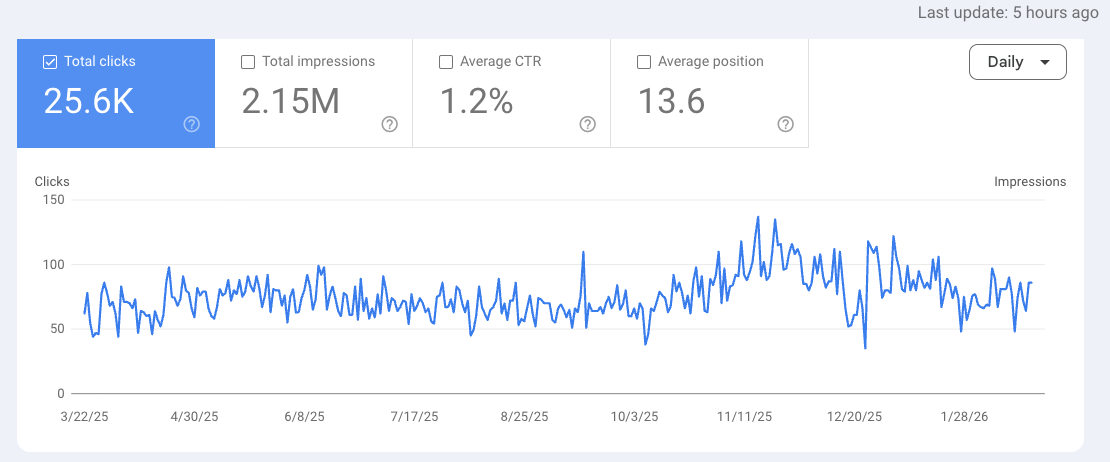
Google Search Console showing 25,600 organic clicks from 2.15 million impressions with upward traffic trajectory
Google Search Console data showing consistent organic traffic growth to 25,600 clicks from 2.15 million impressions, with an average position of 13.6.

Metric Value
Total Organic Clicks 25,600
Total Impressions 2.15 million
Average CTR 1.2%
Average Position 13.6

The Search Console data shows a consistent upward traffic trajectory since the campaign began, with daily click volumes rising from approximately 50-60 to regularly exceeding 100. The 2.15 million impressions confirm the massive search visibility the site has gained - and with the average position at 13.6 and improving, the CTR will continue to grow as more keywords consolidate into top positions where click-through rates are significantly higher.

Key Takeaways

1. WooCommerce's default taxonomy structure creates cannibalisation by design.
Product categories and product tags generate separate indexable URLs that often target identical keywords. If left unchecked, this default behaviour fragments a site's ranking potential across competing pages. Every WooCommerce store should audit its taxonomy for cannibalisation and apply noindex directives to tag pages that duplicate category keyword targets.

2. Cannibalisation fixes produce the fastest ranking improvements in eCommerce SEO.
Removing internal competition doesn't require new content, new links, or new pages. It simply concentrates existing signals into fewer, more authoritative URLs. The result - multiple keywords jumping from beyond position 100 to positions 1-2 - demonstrates the outsized impact of this structural fix relative to the effort required.

3. Specialist eCommerce brands can outrank generalist retailers through topical depth.
A dedicated dog bed brand that covers every aspect of its product niche - materials, features, use cases, breed-specific guidance - can build a level of topical authority that a general pet supplies retailer can't match. This depth advantage is the primary competitive lever for niche eCommerce stores competing against larger players.

4. Content must complement the shopping experience, not compete with it.
The category page content was designed to sit alongside product grids, providing helpful buying guidance before the shopper browses options. This dual-purpose approach - serving both Google's relevance requirements and the shopper's decision-making needs - produces pages that rank well and convert well simultaneously.


About This SEO Campaign

Industry: Pet Products / eCommerce
Location: Australia (national eCommerce)
Platform: WordPress / WooCommerce
Campaign Duration: Ongoing
Services Applied: eCommerce SEO, Technical SEO, Content Strategy, Link Building, Schema Markup Implementation
Primary Goal: Resolve WooCommerce keyword cannibalisation and achieve dominant rankings across dog bed product keywords in Australia
SEO Consultant: Kaan Turk


Running a WooCommerce store where category and tag pages seem to compete with each other? Get in touch for a free SEO audit discussion - I'll map the cannibalisation across your product taxonomy and show you exactly which pages to noindex and which to optimise.

Ecommerce SeoOn Page SeoTechnical SeoContent StrategyLink Building
Share:
KT
Kaan TURKAbout
Senior SEO Specialist

15 years of SEO expertise. Former SEO Lead for Louis Vuitton, LC Waikiki, Vakko, Enterprise Rent a Car, and Monster Notebook. Mathematics graduate bringing data-driven precision to search engine optimisation.

Want Similar Results for Your Business?

Every project starts with understanding your unique challenges. Let's discuss how we can transform your organic presence.